Let’s Encrypt ! Get free, automated, and open Certificate Authority.
-
Let’s Encrypt is a free, automated, and open certificate authority (CA),
run for the public’s benefit. It is a service provided by the Internet
Security ...
Showing posts with label Russia. Show all posts
Israeli start-up Aleph Farms made international headlines this month by announcing that it has successfully grown meat from bovine cells in space
Israeli start-up Aleph Farms made international headlines this month by announcing that it has successfully grown meat from bovine cells in space. While the move is a publicity stunt to many, the Russian technology company that helped facilitate the experiment with its own equipment said boosting food sustainability on Earth is at the core of this breakthrough.
Moscow-based 3D Bioprinting Solutions, the R&D subsidiary of Vivax Bio, is primarily focused on developing the whole range of the hardware, materials, technologies and products comprising the 3D bioprinting industry.
CEO Yusef Khesuani noted he has been working with animal cells since the inception of the company around 2013, but the team only began to apply its expertise in the field of bioprinting to cellular agriculture recently.
“Long-term manned space stations are bound to face unparalleled challenges with nutrition and reutilization of all available organic resources,” he told me via an email.
“As a company, which has gained a lot of experience and expertise with both bioprinting and space-related engineering designs, we believe that biofabrication of cultured meat in space has several unique advantages,” especially around sustainability and ethicality.
He believes experiments, such as the one conducted with Aleph Farms, are a “stepping stone towards sustainable production of cultured meat products during deep space expeditions and initial colonies on the moon and Mars”. .
Human cartilage tissue and rodent thyroid gland
3D Bioprinting Solutions has previously developed Organ.Aut magnetic bioprinter and magnetic bioprinting technology, with the former delivered to the International Space Station (ISS) on board the Soyuz MS-11 manned spacecraft to start bioprinting experiments about a year ago.
“For the first time on orbit, a cosmonaut researcher printed human cartilage tissue and a rodent thyroid gland using a bioprinter,” Khesuani said. “Our magnetic bioprinter became a permanent part of the ISS scientific equipment, enabling us to provide it as infrastructure for a wide range of biotechnology experiments.
“We intend to use our proprietary 3D bioprinting technology and tools as a platform to focus on cell-based cultured meat/fish project, while still further developing our 3D bioprinting technology.”
He noted 3D Bioprinting Solutions approached Aleph Farms in 2018 after realizing the company’s co-founder Dr. Shulamit Levenberg has a similar background in biotechnology, therefore, “we introduced both of our cutting-edge extrusion bioprinter FABION, along with Organ.Aut and magnetic bioprinter, to Aleph Farms”.
Cultured meat market
Aleph Farms’ announcement comes as the global cultured meat market is growing at an accelerate rate to meet the increasing consumer demand for ethical meat products made with minimum environmental damages.
MarketsandMarkets estimates the revenues of the global meat market to be $214 million in 2015, and to reach $593 million by 2032, growing at a 15.7% CAGR during the forecast period.
The research firm said “health concerns about the consumption of meat products and increased investor interest in alternative proteins” are also driving the growth of the cultured meat market, of which North America will account for the lion share in terms of value by 2021 due to the rise of innovations and developments.
Another Israel-based cultured meat specialist Future Meat Technologies recently secured a $14 million round of funding led by S2G Ventures and Emerald Technology Ventures. Founder and chief science officer Yaakov Nahmias is currently using the money to construct a facility, hoping to make the products affordable across Israel by 2021.
However, co-founder and CEO of Aleph Farms, Didier Toubia, believes cultivating meat in space demonstrates several potential benefits.
“Space is one of the scarcest, most hostile and remote environments possible that have nearly no [natural] resources available. The experiment … has demonstrated our capacity to produce food without the reliance on local land and water resources, and then potentially reverse climate change,” he said, noting the UN recently stressed that conventional animal farming methods create a challenging environment that will ultimately undermine food security.
Toubia added: “Intensive animal farming also serves as a major driver of biodiversity loss and contributes to deforestation and fires in the Amazon, and is responsible for the destruction of soils due to monoculture of soy as animal feed.”
The other benefit is that cultivated meat can help avoid potential spoilage of food during transportation or storage since it can be produced anywhere at anytime.
Commercialization challenges
Despite the initial success of growing meat in space, experts believe full commercialization of such products will not materialize in the near term.
Toubia noted Aleph Farms has only established the framework, the infrastructure and the first milestone for further space explorations in the production of cultivated meat in space, saying that, however, the meat created in the experiment is not ready for consumption yet.
“[Our] focus at this stage was on establishing the cell-cell contacts, the structure and the texture of muscle tissues,” he noted.
Additionally, organizing delivery of the cell material to orbit is costly, making it difficult to produce meat in space on a large scale, according to Khesuani.
“Fortunately, our partners at Roscosmos, the Russian space agency, look forward to expanding the range of scientific experiments conducted on the Russian segment of the ISS, and they were eager to offer their assistance, both scientific and organizational, for this experiment,” he said.
“We believe that this space experiment is intrinsically linked to the development of cellular agriculture, the cultured meat in particular here on Earth, and the scientific insights gained from its results will allow the whole industry to reach market earlier.”
Sustainability from Sanctions? The Eurasian Development Bank and Infrastructure Projects in Russia’s Arctic
Eurasian Development Bank (EDB) announced it will be financing infrastructure projects in Russia that were previously turned down by the European Bank for Reconstruction and Development (EBRD). The news follows yet another dismissal by the EBRD of a Russian complaint during the bank’s annual conference last month, citing the temporary suspension of funds for Russian projects in light of international sanctions linked to the Ukraine crisis. From the perspective of Arctic environmental and social sustainability, these developments are worrying because the EDB still lack the clear implementation frameworks deployed by the EBRD and other western lenders to international best practice standards. Nevertheless, they also represent an opportunity for the EDB to flesh out a sustainability framework of their own, with the potential to further reduce environmental and social risks of infrastructure projects across the Russian Arctic.
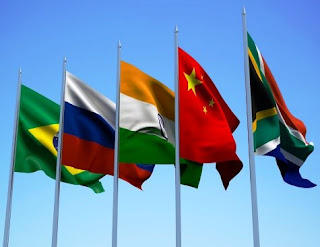
The 8th BRICS (Brazil, Russia, India, China and South Africa) Summit
The 8th BRICS (Brazil, Russia, India, China and South Africa) Summit held in Goa recently, a fair share of focus was laid upon issues relating to energy and environment. The last couple of weeks have highlighted India’s commitment towards addressing global environmental concerns. First, it ratified the Paris climate change agreement; second, it signed the Kigali agreement to amend the Montreal Protocol (in order to cut down its hydrofluorocarbons by 85% of the values in 2024-26 by the year 2047); and now it has agreed to cooperate on a whole lot of sustainability issues through the Goa Declaration.
BRICS Summit 2016: Goa Declaration adopted by India, China, Russia, Brazil and South Africa
We, the Leaders of the Federative Republic of Brazil, the Russian Federation, the Republic of India, the People's Republic of China and the Republic of South Africa, met on 15-16 October 2016 in Goa, India, at the Eighth BRICS Summit.
Recalling all our previous declarations, we emphasize the importance of further strengthening BRICS solidarity and cooperation based on our common interests and key priorities to further strengthen our strategic partnership in the spirit of openness, solidarity, equality, mutual understanding, inclusiveness and mutually beneficial cooperation. We agree that emerging challenges to global peace and security and to sustainable development require further enhancing of our collective efforts.
EGP council: the future of Europe and energy security
The European Green Party (EGP) will hold its autumn council meeting between Nov. 7 and 9 in İstanbul to discuss what challenges lie ahead for Europeans.
Hosted by Turkey's Greens and the Left Party of the Future (Yeşiller ve Sol Gelecek Partisi, or YSGP), the council will focus on key issues of democracy, YSGP central administration board member Ahmet Atıl Aşıcı said at a press conference on Tuesday.
The Sochi 2014 Paralympic Winter Games take place 7-16 March

According to the Organising Committee Sochi 2014 has given Russia a unique chance to change for the better.
The top priority for Sochi 2014 is the creation of a barrier free environment in the host city ensuring that everything being constructed for the Games – transport, roads, sporting and public facilities – will be accessible, and act as a blueprint for the rest of Russia for future years.
Sochi Olympics 2014 and Sustainability
Sochi 2014 Organizing Committee has been implementing the Green Building Recognition Program since 2011, jointly with SC «Olympstroy». In September 2011, awards were presented to the winners of the first stage of the recognition program — a competition among design organizations. In 2012, the results of the second stage were drawn up — a competition among construction organizations. In 2013, there was a competition among Olympic venue user organizations and investors.
Russian Geographic Society mulls expedition to Antarctic lake
"We are pondering the possibility...of sending an expedition to the Russian Vostok station in East Antarctica,"
RF, Canada can widely cooperate in Arctic - ambassador
“We have very good cooperation at the international level,” he stressed. “The Arctic is changing, new opportunities and new challenges emerge, and they are the factors that move the relationship in one direction - rapprochement and cooperation.”
As an example of Russian-Canadian cooperation he cited the project of the Krasnoyarsk-Winnipeg air bridge. “Much work is ahead, we are to settle a number of technical issues, approve the project at the session of the Russia-Canada intergovernmental economic commission,” he noted. “But already now there is a reason to believe that the prospects of an air bridge between Winnipeg and Krasnoyarsk are quite real. This project meets the interests of all, there is infrastructure for its implementation, so it should go ahead.”
Russia FM to sign border agreement with Norway
Russian Foreign Minister Sergei Lavrov, currently on a visit to Oslo, on Tuesday will attend the second ministerial meeting of the renewed Northern Dimension (ND).
This regional programme pursued on an equal basis by four partners - Russia, the European Union, Iceland and Norway - was launched in the new format at the quadripartite summit in Helsinki in 2006. The ND geographical territory covers a large area from the arctic and sub-arctic regions of Europe to the southern shores of the Baltic Sea and from northwest Russia in the east to Iceland and Greenland in the west.
The meeting, which will be held at Oslo City Hall, in essence, will be a review of recent advances in four policy areas of cross-border cooperation and coordination of plans for the future. In particular, the conference participants will "synchronize watches" on the state of affairs in the Northern Dimension Environmental Partnership and cooperation in the field of health and social welfare. The debate will unfold also on a transition to earliest practical implementation of initiatives in transport, logistics and the sphere of culture. The sides will also address the process of formation of the ND Business Council and the Institute of the Northern Dimension.
Europe’s security architecture needs "a Russian support column"
The prospect for sustainable relations between Russia and NATO will depend on how the Alliance’s new strategy gives due consideration to Russian concerns over European security.
Russian Deputy Foreign Minister Sergey Ryabkov, US Assistant Secretary of State Philip Gordon and US ambassador to NATO Ivo Daalder met in Moscow today to discuss preparations for next month's NATO-Russia summit.
"The meeting focused on the work of the NATO-Russia Council, primarily the preparations for the forthcoming summit in Lisbon," the Russian Foreign Ministry said.
The officials also discussed pressing issues surrounding US-Russian political dialog, including missile defense, the CFE (Conventional Armed Forces in Europe) treaty and joint assessment of major security risks and challenges.
President Medvedev accepted his invitation to attend the NATO meeting in Lisbon (Nov. 19-20) during last week’s “troika” summit in the French seaside town of Deauville. There, the Russian leader discussed European security with German Chancellor Angela Merkel and French President Nicolas Sarkozy.
Although many issues were touched upon in Deauville, Medvedev’s proposal for a new European Security Pact, which he first floated in April 2009, was greeted with “considerable interest,” according to one senior Russian diplomat who spoke on the sidelines of the summit.
Russian Deputy Foreign Minister Sergey Ryabkov, US Assistant Secretary of State Philip Gordon and US ambassador to NATO Ivo Daalder met in Moscow today to discuss preparations for next month's NATO-Russia summit.
"The meeting focused on the work of the NATO-Russia Council, primarily the preparations for the forthcoming summit in Lisbon," the Russian Foreign Ministry said.
The officials also discussed pressing issues surrounding US-Russian political dialog, including missile defense, the CFE (Conventional Armed Forces in Europe) treaty and joint assessment of major security risks and challenges.
President Medvedev accepted his invitation to attend the NATO meeting in Lisbon (Nov. 19-20) during last week’s “troika” summit in the French seaside town of Deauville. There, the Russian leader discussed European security with German Chancellor Angela Merkel and French President Nicolas Sarkozy.
Although many issues were touched upon in Deauville, Medvedev’s proposal for a new European Security Pact, which he first floated in April 2009, was greeted with “considerable interest,” according to one senior Russian diplomat who spoke on the sidelines of the summit.
17th ASEAN Summit promotes sustainable development
The 17th ASEAN Summit and other related meetings from October 28-30 is highly significant for the on-going process of building an ASEAN community by 2015.
The three-day event will see 11 major meetings, including the 17th ASEAN Summit, the regular ASEAN+1 Summit with partners, such as including China, Japan, the Republic of Korea, and India, as well as with Russia, Australia, New Zealand and the United Nations; the ASEAN+3 Summit (with China, Japan and the Republic of Korea), and the fifth East Asia Summit.
The summit will be attended by 18 leaders of ASEAN member countries and the bloc's partners plus the United Nations Secretary General. For the first time, the Russian Foreign Minister and the US Secretary of State will also attend the East Asia Summit as special guests.At these summits, ASEAN and its partners will discuss ways of developing each country and for the sake of peace and stability in the region and the world.
ASEAN 17- the last ASEAN summit in 2010, will build on previous achievements and the theme of 'Toward an ASEAN community – from vision to action'.
ASEAN leaders will discuss measures to accelerate the creation of an ASEAN community, strengthen regional connections and implement the ASEAN Charter.
The summit will discuss how to cement ties between ASEAN and its partners. It will also discuss and work out measures to raise the bloc's capacity to cope with emerging challenges such as post-economic crisis recovery, sustainable development, climate change, natural disasters, epidemics, and environmental degradation.
At other related meetings, they will mull over practical measures to maintain the ASEAN+1, ASEAN+3 and the East Asia Summit (EAS) in which ASEAN plays a central role. Especially, at the EAS summit as ASEAN leaders will officially invite Russia and the US to take part from 2011. >>>
Russia’s top priorities in the Arctic
- The creation of top-quality, comfortable living conditions for local people and the pursuit of a frugal attitude towards the indigenous and small Arctic nations’ socio-economic infrastructure and traditions;
- The support for new economic-growth points and incentives for large-scale domestic and foreign investment – currently about 20 percent of Russia’s GDP and 22 percent of Russian exports are produced in the Arctic;
- Substantial investment in the scientific and nature-conservation infrastructure.
Russian speakers underscored that Russia, as one of the claimants, is responsible for the sustainable development of the Arctic. The Arctic will become a major source of energy resources and a key global transport hub in the next 50 years.
Subscribe to:
Posts (Atom)
-
Experts from 22 countries will attend the 9th International Meeting on Organic and Sustainable Agriculture, which will be held here f...
-
Hundreds of stakeholders from across the continent gathered here recently for the Seventh African Development Forum, or ADF VII, to discu...
-
The annual joint conference of the United Nations and non-governmental organizations (NGOs), which begins next week in Bonn, Germany, will ...
-
“The operating principle for an East Asian community needs to be sustainable development .” The 2011 Asia Future Forum (AFF) wrapped...
-
Skype is apparently not the limit for the information development community in Estonia. Out of the same area where the Skype communications...
-
The Royal Welsh College of Music & Drama and World Stage Design 2013 are currently seeking proposals for the competition to design a sus...
-
The University of Maziar, in collaboration with Iranian Cultural Heritage, Handicrafts and Tourism Organization (ICHTO) organize "The...
-
Micro combined heat and power or micro-CHP or mCHP is an extension of the idea of cogeneration to the single/multi family home or small of...
-
The Amsterdam College of Mayor and Alderpersons has outlined new plans to increase the pace of improving sustainability in the Dutch cap...
-
"China's Top 100 Green Companies", brought forward by the Daonong Centre for Enterprises and the Green Herald Magazine, wh...